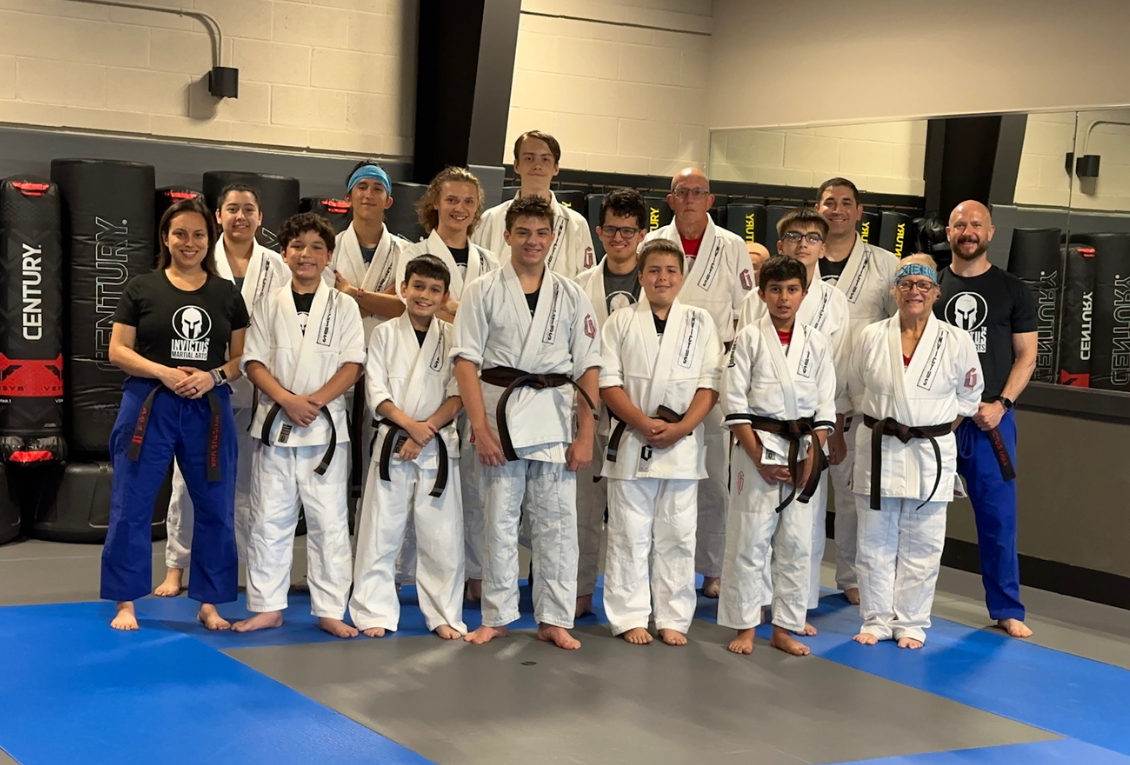
Every parent wants to see their child grow in confidence, discipline, and resilience — and martial arts is one of the best ways to develop those qualities. Yet, it’s not uncommon for kids who were initially excited to put on their uniform to suddenly say, “I don’t want to go to class anymore.”
So, why do kids quit martial arts? And more importantly, how can parents help them rediscover their excitement and motivation?
Let’s explore some of the most common reasons — and practical ways to turn things around.
1. They Hit the “Boredom Plateau”
At first, everything is new and exciting. Kids are learning cool moves, earning new belts, and making new friends. But once the routine settles in, the excitement can fade — especially if they’re not seeing quick progress.
How parents can help:
Remind your child that mastery takes time. Help them set small, achievable goals (like doing more push-ups or earning their next stripe). Celebrate effort over outcome. And if possible, attend a seminar or tournament where they can not only participate, but they can watch advanced students as well — inspiration is contagious!
2. They Struggle With Confidence
Some kids quit because they feel like they’re “not good enough.” They compare themselves to other kids in their class or feel frustrated when techniques don’t come easily.
How parents can help:
Talk openly about challenges being part of growth. Share a story of a time you struggled to learn something. Reinforce that martial arts isn’t about being perfect — it’s about getting a little better every day. Encourage them to focus on progress, not perfection.
3. They Feel Overwhelmed by Other Activities
Kids today have busy schedules — school, sports, homework, and social events can compete for their time and energy. When they feel stretched thin, martial arts might seem like the easiest thing to drop.
How parents can help:
Reevaluate the family calendar together. Sometimes, adjusting their schedule or reducing other commitments helps them enjoy martial arts again. Remind them of the balance and stress relief martial arts provides — it’s not “just another activity,” it’s an essential life skill.
4. They Don’t See the Bigger Picture (Yet)
You understand how valuable martial arts is for developing discipline, confidence, and respect — but kids live in the moment. They don’t always see how what they’re learning now will benefit them for years to come.
How parents can help:
Connect the dots. Point out how martial arts is helping them in school, sports, or friendships. Maybe they’re more focused, calmer, or more respectful — praise them! Kids are more likely to stick with something when they can see its impact.
5. They Need Encouragement from Both Parents and Instructors
Sometimes, kids simply need a little extra motivation — not pressure, but partnership. When parents and instructors work together, kids thrive.
How parents can help:
Stay in communication with your child’s instructor. Share what your child enjoys most (or least) about class. A supportive coach can often reignite a child’s excitement in just a few conversations or small challenges.
The Bottom Line: Quitting Isn’t Always the Answer
It’s normal for kids to go through ups and downs in any long-term activity. But perseverance — especially when things get tough — is where the real growth happens.
By showing patience, encouragement, and perspective, parents can help their kids rediscover the joy and pride that comes from sticking with martial arts. Because one day, that “I don’t want to go” moment could turn into a proud black belt ceremony — and a lifelong lesson in resilience.
Ready to join our martial arts community? It’s easy to GET STARTED.
As summer winds down and backpacks are packed, parents everywhere are preparing their kids for another school year. But while pencils, notebooks, and new shoes are important, there’s one tool that can make a massive difference in your child’s success—martial arts.
At first glance, martial arts might seem unrelated to school. But beneath the kicks and punches are powerful lessons in discipline, focus, and self-confidence that can help your child thrive both in and out of the classroom.
1. Boosts Confidence for the Classroom and Beyond
Back-to-school jitters are real. New teachers, classmates, and routines can feel overwhelming—especially for younger kids. Martial arts training helps children build inner confidence. Earning belts, mastering new techniques, and achieving goals teaches them that they can overcome challenges. That self-assurance follows them into the classroom, helping them raise their hands, make new friends, and speak up when they need help.
2. Improves Focus and Self-Control
If your child struggles with attention, martial arts can be a game changer. Classes are designed to develop focus, listening skills, and the ability to follow directions—skills that directly translate to better behavior and improved performance in school. Many parents report that after a few weeks of training, their kids become more attentive, both at home and in class.
3. Encourages Respect and Responsibility
Martial arts emphasizes traditional values like respect for others, responsibility for one’s actions, and doing your best. From bowing to instructors to helping clean up after class, kids learn how to be respectful and accountable—qualities every teacher appreciates.
4. Helps Manage Stress and Emotions
Let’s face it: school can be stressful. Martial arts offers a healthy outlet for kids to release energy, frustration, and anxiety in a safe, structured environment. It teaches breathing techniques and emotional regulation that help children handle pressure with calm and resilience.
5. Promotes Physical Fitness and Healthy Habits
With school days packed with sitting and screen time, it’s more important than ever to keep kids active. Martial arts keeps them moving, strengthens coordination, and promotes lifelong healthy habits—all while being a lot of fun.
Make This School Year the Best Yet
Whether your child is shy, energetic, struggling with focus, or just ready to try something new, martial arts can give them the tools they need to succeed this school year—both academically and personally.
Ready to empower your child with confidence, focus, and discipline? Try a martial arts class today and set them up for their strongest year yet!
Ready to join our martial arts community? It’s easy to GET STARTED.
Martial arts can be a powerful tool in a child’s development—teaching discipline, confidence, focus, and respect both on and off the mat. Whether your child is just starting or has already earned several belts, your role as a parent is essential to their growth and enjoyment in martial arts. Here are five practical tips to help support and guide your young martial artist on their journey:
1. Celebrate Effort, Not Just Belts
Progress in martial arts isn’t always linear. Some children may quickly earn new belt levels while others may stay at the same rank longer—and that’s okay. Instead of focusing solely on promotions, praise your child’s effort, attitude, and resilience. Learning a difficult technique, facing a sparring match with courage, or simply showing up for class on a challenging day is just as worthy of celebration as a new belt.
2. Be Consistently Supportive—Not a Sideline Coach
Cheering from the sidelines is great—but avoid turning into your child’s second coach. Martial arts instructors are trained professionals who know how to guide students through physical and mental challenges. Your job is to support, encourage, and trust the process. After class, instead of critiquing, try asking: “What was one thing you learned today?” or “What part of class was your favorite?”
3. Foster a Growth Mindset
Martial arts is filled with opportunities to learn from mistakes, try again, and get better. Help your child understand that setbacks are part of the journey—not signs of failure. If they struggle with a technique or have a rough sparring round, remind them that every black belt was once a white belt who didn’t give up.
4. Prioritize Consistency Over Intensity
Your child doesn’t need to train seven days a week to benefit from martial arts. In fact, doing too much too fast can lead to burnout. Instead, help them build a consistent routine they can sustain. Attending class at least twice per week, practicing just ten minutes a day at home, and setting achievable goals all contribute to steady progress and long-term enjoyment.
5. Embrace the Whole Journey—Not Just the Competition
Tournaments and belt tests are exciting, but they’re only a small part of the martial arts experience. Don’t lose sight of the everyday wins: overcoming nerves, showing respect, mastering a combo or form, or helping a new student during class. These are the lessons that will shape your child into a stronger, more confident individual—not just in martial arts, but in life.
Final Thought:
You don’t need to be a martial artist yourself to make a positive impact on your child’s journey. By being present, patient, and supportive, you help create an environment where they can thrive—on the mats and beyond.
Whether your child dreams of becoming a black belt or is simply enjoying attending weekly classes, your encouragement matters more than you know. Keep showing up, keep cheering, and remember: you’re part of their team, too.
Ready to join our martial arts community? It’s easy to GET STARTED.
As another school year ends and summer vacation begins, parents everywhere are looking for meaningful, fun, and healthy ways to keep their kids active and engaged. While summer camps, sports leagues, and academic workshops are all great options, one activity stands above the rest when it comes to offering a well-rounded experience for kids of all ages: martial arts.
Here are just a few reasons why martial arts is the best summer activity for kids:
1. Physical Fitness Without the Pressure
Kids need to move, especially in the summer when screens can easily become the default babysitter. Martial arts provides a full-body workout that improves strength, flexibility, coordination, and endurance. But unlike many team sports, martial arts is non-competitive in the traditional sense. Kids focus on their individual progress, learning at their own pace without the pressure of “winning” or being picked first.
2. Builds Confidence and Discipline
Martial arts emphasizes respect, self-control, and perseverance. Kids are taught to listen attentively, follow multi-step instructions, and apply themselves — valuable habits that carry over into school and home life. Earning a new belt or breaking a board gives kids a tangible sense of achievement, building self-esteem and resilience at every class.
3. Structured Fun That Keeps Kids Engaged
Summer can feel long, and it’s easy for kids to lose the routine they’re used to during the school year. Martial arts classes offer a structured environment with clear goals, helping kids stay focused and productive. Yet it’s also fun — high-energy drills, board breaking, and friendly light-touch sparring make every session exciting and something kids look forward to.
4. Teaches Self-Defense and Awareness
Beyond the physical and social benefits, martial arts equips kids with basic self-defense skills as well as the awareness to avoid dangerous situations. This gives both kids and parents peace of mind. While the focus is on self-control rather than aggression, knowing how to protect oneself responsibly is a life skill worth having.
5. Inclusive and Suitable for All Skill Levels
Whether your child is shy or outgoing, athletic or new to physical activity, martial arts welcomes everyone. Instructors are trained to meet kids where they are, helping them grow at a pace that’s best for them. The result? A supportive and inclusive community where every child feels like they belong.
6. A Break from Screens
Let’s face it: managing screen time in the summer can be a major challenge. Martial arts gives kids a reason to unplug — and once they’re kicking, punching, and practicing their combos, they won’t even miss their devices. It’s a great way to encourage real-world interaction and mindfulness.
7. Carryover Benefits Beyond Summer
The skills kids learn in a summer martial arts program don’t end with the season. Improved focus, patience, and physical coordination can give them a head start when they return to school in the fall. Many parents find that kids who regularly practice martial arts show better behavior, academic performance, and social skills throughout the school year.
So, ff you’re looking for a summer activity that nurtures your child’s body, mind, and character, martial arts checks every box. It’s more than just kicks and punches — it’s a pathway to personal growth that stays with them long after the summer ends.
So this summer, instead of just keeping your kids busy, give them something that will empower, energize, and inspire them. Sign them up for a martial arts program — you may be surprised how much they grow.
Ready to join our martial arts community? It’s easy to GET STARTED.
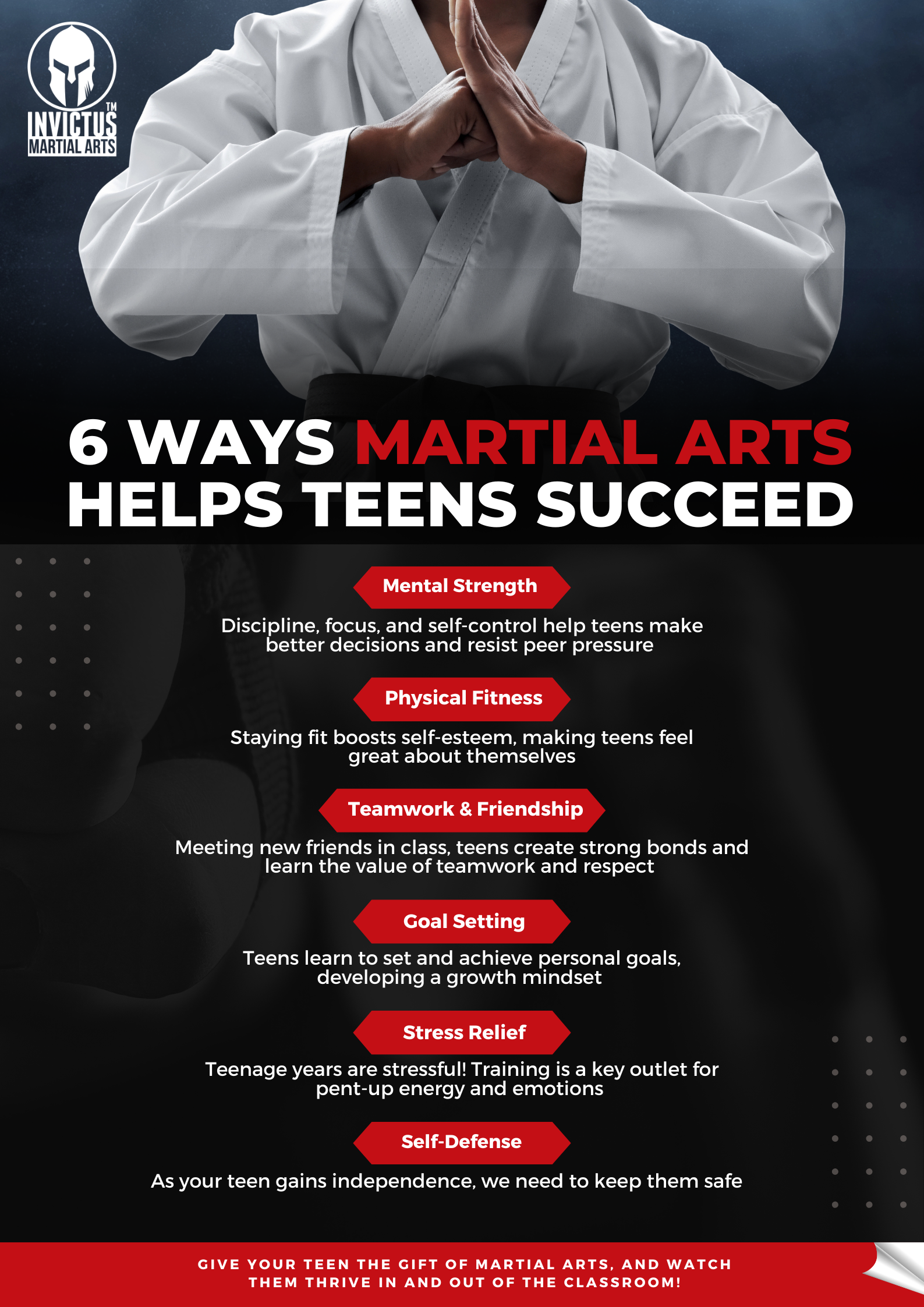
Martial arts has long been recognized for its physical benefits, but it offers much more than just self-defense skills and fitness. For teenagers, who are in a critical developmental stage both physically and mentally, martial arts can provide a unique set of tools that support personal growth, success, and a deeper understanding of themselves and the world around them.
Let’s explore six ways martial arts helps teens succeed, not only in their daily lives but also in their futures.
In conclusion, martial arts is much more than just a way to stay fit or learn how to defend oneself. It provides teenagers with a comprehensive toolkit for success, encompassing physical, mental, and emotional growth. Through the lessons of discipline, respect, focus, and perseverance, martial arts helps teens become confident, responsible, and resilient individuals ready to take on life’s challenges. Whether they go on to become athletes, professionals, or community leaders, the lessons learned in martial arts will guide them toward success in all aspects of their lives.
Ready to join our martial arts community? It’s easy to GET STARTED.
Martial arts can be a transformative experience for children, offering not only physical skills but also improved confidence and discipline. As a parent, supporting your child during their martial arts class is crucial to your child’s growth and enjoyment of the sport. Here are some effective ways to be there for your child during their martial arts training.
Arrive on Time
Punctuality sets a positive tone for your child’s experience. Arriving early allows them to settle in, use the bathroom before class to prevent interruptions, put their gear on, and mentally prepare to try their best. It also demonstrates to your child that you value their commitment to their martial arts training.
Be Prepared
Ensure your child is dressed appropriately and has all necessary gear. Most reputable martial arts schools will have a dress code that includes expectations for when and how to wear their uniform/gi and belt. Required gear may include gloves, shinguards, mouth guards, and groin protection (as applicable). Familiarize your child with their school’s rules and expectations, so they feel comfortable and focused when it’s time to train.
Avoid Over-Interfering
While it’s natural to want to help, resist the urge to coach or correct your child during their class. Verbal feedback from parents can be distracting to others and can confuse your child. Trust the instructors and coaches to provide feedback and guidance. It is important that your child recognizes their instructors as the ultimate authority figures during classes. Their role is to lead your child in their learning and development. Your role is to support, not to direct.
Stay Positive and Encouraging
Learning martial arts can be challenging, and your child may face difficulties. Encourage patience and perseverance. Remind them that progress takes time, and everyone learns at their own pace. Use positive reinforcement before and after class. A few encouraging words can boost your child’s confidence and motivation. Celebrate their efforts, regardless of whether they achieve specific goals during that class. After class, focus on asking them what they learned and how they felt. This dialogue can help reinforce important lessons, clarify any frustrations, and strengthen your bond.
Avoid Comparison
Every child is on their own journey. Avoid comparing your child’s progress to that of others, whether siblings or classmates. Focus on their individual growth and celebrate their unique achievements. Rather than trying to evaluate their performance in comparison to others, take the time to communicate with your child’s instructors. They can provide insights specific to your child’s strengths and areas for needed improvement. Understanding the instructors’ expectations will help you support your child more effectively. Always encourage your child to practice at home to ensure they continue to make progress in their development.
Attend Events Together
Attend and participate in rank assessments, tournaments, and special events. Your child is an important member of a very special community. Fostering close relationships with the other students (and parents) will enhance their experience. Additionally, your presence at these events shows that you care about their commitment and accomplishments, reinforcing the value of their hard work.
Conclusion
Supporting your child during their martial arts classes is an important part of their journey. By maintaining a positive, encouraging attitude and maintaining open communication, you can help your child thrive both in the dojo and beyond. Remember, your involvement not only enhances their martial arts experience but also teaches them the value of commitment, resilience, and community.
Ready to join our martial arts community? It’s easy to GET STARTED.
The martial arts have captivated imaginations worldwide through action-packed movies, grandiose stories of self-discipline, and the intriguing mystery surrounding ancient practices. However, despite their broad appeal, there are still a slew of common misconceptions about martial artists that exist in our society. Let’s peel back the layers of misunderstanding and shed some light on what it truly means to train in the martial arts.
1. Martial Artists Are Always Aggressive
Misconception: Martial artists are prone to aggression and violence, often seeking out conflicts.
Reality: In truth, some of the core tenets of martial arts training include the development of discipline, self-control, and respect. The techniques learned in martial arts are intended for self-defense and personal growth, not for initiating conflicts. In fact, most martial artists find that their training helps them manage their emotions better and approach situations with a calm and composed mindset. The goal is to avoid a fight at all costs, but to know how to protect oneself if absolutely necessary.
2. Martial Arts Are Only About Physical Strength
Misconception: Success in martial arts is solely determined by physical strength and size.
Reality: While physical fitness and strength can enhance a martial artist’s performance, they are not the only (and definitely not the most important) factors. The best martial arts instructors place a strong emphasis on technique, strategy, flexibility, and mental focus. In fact, martial arts styles, like jiu jitsu, also emphasize the ability to use leverage and technique to overcome a physically stronger opponent. Furthermore, martial arts training cultivates attributes like resilience, patience, and mental fortitude, which are crucial for advancement.
3. Martial Arts Are a Thing of the Past
Misconception: Martial arts are outdated and irrelevant in modern times.
Reality: Martial arts have evolved significantly and continue to adapt to contemporary needs. Beyond learning self-defense, training in the martial arts offers valuable lessons in leadership, personal development, and mental health. They also promote physical fitness, enhanced flexibility, and improved focus and concentration. Best of all, a high-quality martial arts instructors will be sure to integrate various aspects of sports science and psychological skills training to provide a comprehensive approach to well-being.
4. All Martial Artists Are Experts
Misconception: Everyone who practices martial arts is an expert or a black belt.
Reality: If you find someone who calls themselves an expert in the martial arts, run the other way. The truth is, martial arts gyms have practitioners at all levels. Many people begin martial arts training with no experience as a hobby or for fitness and may not even aim to become experts. In fact, the best martial artists (and instructors) understand that there is always more to learn from their training and every practice session is an opportunity to improve. The journey through martial arts is personal and ongoing; practitioners continuously learn, grow, and refine their skills. The value of martial arts training is not solely in achieving a black belt but in the ongoing process of self-improvement and learning.
5. Martial Arts Training Is Too Dangerous
Misconception: Training in martial arts is inherently dangerous and leads to frequent injuries.
Reality: While training in the martial arts does involve physical activity and the potential for injury, proper training environments and safety protocols significantly reduce these risks. Experienced instructors prioritize safety and teach students how to practice techniques in a controlled and safe manner. Many martial arts gyms emphasize the importance of warming up, using proper technique, and wearing high-quality protective gear to minimize the risk of injury.
6. Martial Arts Are Just for Young People
Misconception: Martial arts are only suitable for kids/young people and not for older adults.
Reality: Martial arts can be practiced by people of all ages. Many martial arts disciplines offer classes tailored to different age groups and skill levels. For older adults, martial arts can be an excellent way to stay fit, improve balance and coordination, and foster a sense of community. The principles of martial arts—such as respect, perseverance, and mindfulness—are beneficial at any age.
7. Martial Artists Are All the Same
Misconception: All martial artists have the same personality traits or lifestyle.
Reality: Martial artists come from diverse backgrounds and possess a wide range of personalities and lifestyles. What unites them is their commitment to the practice and the principles of martial arts, but beyond that, they are as varied as any other group of people. The practice of martial arts is a personal journey, and each individual brings their unique qualities to their training. This creates a strong and happy martial arts community!
Conclusion
Understanding the martial arts requires looking beyond the stereotypes and appreciating the depth and richness of the practice. Training in the martial arts is not just about fighting; it’s about a holistic approach to personal development, self-discipline, and respect. By dispelling these common misconceptions, we can better appreciate the true essence of the martial arts community as well as the many benefits martial arts offers to those who train in them.
So, the next time you encounter a martial artist, remember that their journey is as varied and individual as they are. Behind every punch and kick is a unique story of dedication, growth, and the pursuit of inner and outer strength.
Ready to join our martial arts community? It’s easy to GET STARTED.
It’s common for new members to ask us why martial artists wear gis. Even if you’ve never taken a martial arts class, you’ve most likely seen a tv show or movie depicting a room full of people wearing white uniforms and belts punching and kicking. Most people understand that this practice is rooted in tradition, but the purpose of the gi (or uniform) is multifaceted.
The word “gi” is derived from the Japanese term “Keikogi” which means “practice clothing”. Gis can range in color from white to black or even blue. Most students beginning their training will wear a white gi symbolizing purity. Colored gis are typically reserved for students that hold a higher rank or position (ie. instructors) within the gym.
While there are several great reasons to wear a gi during martial arts training, we’re going to take a look at our top 3 reasons martial artists wear gis.
Dress For Success
Let’s face it. Some days are just plain challenging. The car won’t start, you’re late to school/work, you bomb an important presentation, and you can’t seem to catch up much less get ahead…the weight of the world can sit heavier some days and takes a toll on our mood. But, as a martial artist, you have a secret weapon…your gi! Sounds crazy, right? But something kind of magical happens when you shed the clothes you were wearing that day and put on your training gi. It’s almost like a reset of sorts. You get an opportunity to physically remove the worst parts of your day and put on new clothes that make you feel strong, confident, and ready to perform at your best. Couple that with a great martial arts class and you’ll leave feeling energized and ready to tackle the rest of your day.
Get The Most Out Of Your Training
Nothing is worse than being mid-workout and suddenly your shorts start ridding up and your shirt starts sticking to you in ways that limit your movement. No one likes feeling self-conscious while they exercise. It’s hard enough to put yourself out there and commit to making healthier choices. You don’t need the added distraction of uncomfortable workout clothes. A good quality training gi will allow for easy movement for striking, kicking, and grappling. As a martial artist, wearing a training gi keeps your focus on your training rather than on what you (or others in your class) are wearing.
You Belong To A Great Community
Experts agree that when you feel like you belong to a supportive community, your physical and metal health improves. When you put on a gi that showcases your specific academy or gym, you feel like you belong. And when you’re surrounded by other people wearing the same gi it creates a synergistic environment where everyone thrives. Much like team sports like baseball and basketball wear matching uniforms, the same is true for martial artists. While martial arts is largely considered an individual sport, there is still an emphasis on working with partners for sparring and pad drills. Wearing matching gis fosters an environment that encourages teamwork and good partnership within the gym.
Ready to put your gi on and start training in the martial arts? At Invictus, we help you do just that! And it’s easy to GET STARTED.
Everyone knows that today more than ever you need self-defense tips to save your life. Because we don’t know when or how it will happen. But we do know this: you are your first line of defense, so training isn’t optional, it’s essential.
Comprehensive studies have shown time and time again that self-defense workshops and education are always beneficial. In fact, not only does a person’s risk of attack decrease but also a person’s fear and anxiety decrease, and a person’s confidence, sense of self-efficacy, and self-esteem increase (University of Oregon)!
Self-Defense Tips To Save Your Life
Line of attack
Every attack has an angle to it. Regardless of which direction the attack comes from, your first priority is to get out of the direct line of attack. Every weapon and means of attack has a specific range and angle and your number one goal is to avoid that direct line of attack at all costs.
Control
It’s never about the weapon or means of attack but always about the source of the attack. A shovel is a useful tool for yard work and gardening. A bat is a useful tool for baseball. A knife is a useful tool for cooking. But all of these tools have the potential to be harmful in the hands of someone with violent intent. So this means that your second priority is to minimize damage to yourself while putting you in a position to reclaim control over your personal sovereignty and safety.
Control can look like the following:
Creating maximal distance between you and the threat
Using a strong, powerful voice to stop a threat
Leveraging non-violent restraint to minimize damage to you and the threat
And more…
Neutralize
Threats must be neutralized. Self-defense situations typically occur when one person believes they have an opportunity cost putting themselves at an unfair advantage. A person needs to apply reasonable force to a threat to bring the situation back into homeostasis. Much like Control, neutralizing the threat can take many forms ranging from range management to non-violent submissions to reasonable but decisive force. Swift action is absolutely key to survival and can be accomplished with regular, consistent practice while increasing the level of pressure with a willing and helpful partner.
Disarm
All things being equal, it is always better to get away from a person with violent intent rather than try to disarm them. There are too many variables in the chaos of protection that can make even the most trained person become a victim of increased violence. That said, not every attack has a weapon to consider but every attacker has the potential to use a weapon. If you decide to attempt to disarm a person with violent intent who is also using a weapon, be prepared to be harmed by the weapon. Your safest plan of action is to simply neutralize the threat and quickly remove yourself from the situation as fast as possible then report what happened to the local authorities.
These self-defense tips to save your life can quickly become your first line of protection. With proper training and consistent practice, you can feel safe and secure every day.
One of the most important aspects of any goal-setting activity that you have is to make your resolution stick. Of course, most people would agree that while that’s easy to say it’s more challenging to actually do. So, here are a few quick tips and tricks you can quickly use to make your resolution stick:
Know What You Want
You must first know what it is you hope to accomplish. Whether it’s to fix some mistakes of the past or avoid some undesired future, knowing what it is you actually want to achieve is the first and most important step.
In fact, some of the most successful people agree that creating a vision board is key to actualizing your goals. There are several reasons that this is absolutely true but here are some key points to consider:
You can SEE your goals daily
You will FEEL like you’re making progress
You have a greater SENSE of motivation
Of course, if making a vision board seems daunting to you, simply find some images that inspire you and keep them where you can see them daily.
Remember, this must be personal and doable… but most of all, what you ACTUALLY want. Because people who know what it is they truly want always get it.
Have A Plan
There’s a good reason that books like Discipline Equals Freedom and Atomic Habits are so popular: success only comes from consistent planning and daily execution.
Without a plan to achieve your goals, your resolutions simply become wishes. Having coaches and mentors to support you is crucial and key to accomplishing your goals.
In fact, one of the best examples of this is in mixed martial arts training at Invictus. Each new belt rank and level quickly support your wellness goals (whether physical, mental, etc) while keeping you challenged and growing. It’s easily one of the best ways to feel good and get a great workout while making tangible progress.
Daily Execution
Put simply: your goals won’t work unless you do.
Recently, during one of our small group classes, the coaches were having a conversation with members about small, daily actions and how quickly they can add up. The coaches asked the question: have any of you ever done more than 7,000 push-ups? Everybody agreed that they didn’t know. The coaches then encouraged the members that if they committed to only 20 push-ups per day that they would accomplish having completed over 7,000 push-ups in a year.
Everyone was stunned.
No one had thought it was that simple.
Small, daily action creates big results. To do this, here are a few suggestions to leverage to turn your goals into results:
Set a reminder on your phone
Tell a friend to help keep you accountable
Join a community of like-minded people
Hire a coach to help you
Schedule your actions
The most important lesson here is this: take consistent and intentional action daily.
Track Your Progress
You need to know where you are today and set up a system to review your progress. There are several great resources available via apps and web services today. But it’s usually the simple one that will help you the most.
For example, when it comes to nutrition goals, most people set big goals (which is good) with unrealistic time frames or caloric targets. This makes keeping your goals so challenging that the goal actually becomes a roadblock. The best nutrition goals are the ones that you can actually do consistently. Meaning, if you have the resolution to drink more water, start simply by drinking 500 ml in the morning and 500 ml in the evening. Then, as you feel thirsty throughout the day, you’re free to drink water as needed. To do this, you can buy a 1,000 ml (about 1 qt) water bottle and mark it halfway so that you can easily see your progress.
Whatever your goal, keep track of your progress to see what’s working and what isn’t. Think of it from a scientific perspective and that you need data to better understand what is effective at helping you achieve your goal and what is less effective.
Set A New Goal
Inevitably, if you’ve been following these success methods, you will need to set a new goal. Now, it could be that you’ve learned along the way that your initial goal needed adjusting. It could also be that you accomplished your goal and now you’re ready for a new challenge. Regardless, always remember that the goal isn’t the point… your transformation is.
It’s been said that the journey is often more important than the destination. But in fact, you can be confident in knowing that who you are becoming as a result of achieving your goals is the ultimate prize and best result you can accomplish.
Make Your Resolution Stick
See, when you become a healthier individual, then your family is better because of it. Because you become better, their lives are positively influenced.
Your health and wellness goals made you a better person…
…improving the quality of life for your whole family,
…which makes for a better community,
…and inspires others to take better care of themselves.
Realize that there are people right now in your life that need you to do this. They are waiting for you to take bold action to accomplish your goals and make your resolution stick.
At Invictus, we help you do just that! And it’s easy to GET STARTED.