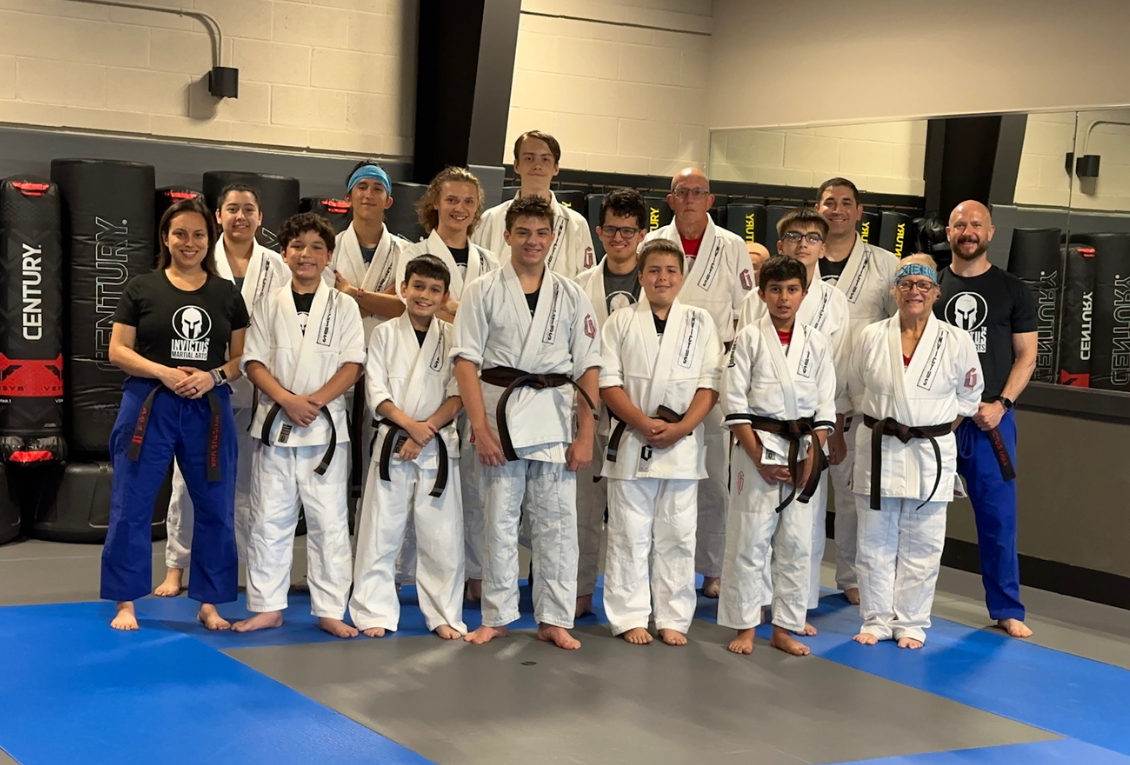
The martial arts have captivated imaginations worldwide through action-packed movies, grandiose stories of self-discipline, and the intriguing mystery surrounding ancient practices. However, despite their broad appeal, there are still a slew of common misconceptions about martial artists that exist in our society. Let’s peel back the layers of misunderstanding and shed some light on what it truly means to train in the martial arts.
1. Martial Artists Are Always Aggressive
Misconception: Martial artists are prone to aggression and violence, often seeking out conflicts.
Reality: In truth, some of the core tenets of martial arts training include the development of discipline, self-control, and respect. The techniques learned in martial arts are intended for self-defense and personal growth, not for initiating conflicts. In fact, most martial artists find that their training helps them manage their emotions better and approach situations with a calm and composed mindset. The goal is to avoid a fight at all costs, but to know how to protect oneself if absolutely necessary.
2. Martial Arts Are Only About Physical Strength
Misconception: Success in martial arts is solely determined by physical strength and size.
Reality: While physical fitness and strength can enhance a martial artist’s performance, they are not the only (and definitely not the most important) factors. The best martial arts instructors place a strong emphasis on technique, strategy, flexibility, and mental focus. In fact, martial arts styles, like jiu jitsu, also emphasize the ability to use leverage and technique to overcome a physically stronger opponent. Furthermore, martial arts training cultivates attributes like resilience, patience, and mental fortitude, which are crucial for advancement.
3. Martial Arts Are a Thing of the Past
Misconception: Martial arts are outdated and irrelevant in modern times.
Reality: Martial arts have evolved significantly and continue to adapt to contemporary needs. Beyond learning self-defense, training in the martial arts offers valuable lessons in leadership, personal development, and mental health. They also promote physical fitness, enhanced flexibility, and improved focus and concentration. Best of all, a high-quality martial arts instructors will be sure to integrate various aspects of sports science and psychological skills training to provide a comprehensive approach to well-being.
4. All Martial Artists Are Experts
Misconception: Everyone who practices martial arts is an expert or a black belt.
Reality: If you find someone who calls themselves an expert in the martial arts, run the other way. The truth is, martial arts gyms have practitioners at all levels. Many people begin martial arts training with no experience as a hobby or for fitness and may not even aim to become experts. In fact, the best martial artists (and instructors) understand that there is always more to learn from their training and every practice session is an opportunity to improve. The journey through martial arts is personal and ongoing; practitioners continuously learn, grow, and refine their skills. The value of martial arts training is not solely in achieving a black belt but in the ongoing process of self-improvement and learning.
5. Martial Arts Training Is Too Dangerous
Misconception: Training in martial arts is inherently dangerous and leads to frequent injuries.
Reality: While training in the martial arts does involve physical activity and the potential for injury, proper training environments and safety protocols significantly reduce these risks. Experienced instructors prioritize safety and teach students how to practice techniques in a controlled and safe manner. Many martial arts gyms emphasize the importance of warming up, using proper technique, and wearing high-quality protective gear to minimize the risk of injury.
6. Martial Arts Are Just for Young People
Misconception: Martial arts are only suitable for kids/young people and not for older adults.
Reality: Martial arts can be practiced by people of all ages. Many martial arts disciplines offer classes tailored to different age groups and skill levels. For older adults, martial arts can be an excellent way to stay fit, improve balance and coordination, and foster a sense of community. The principles of martial arts—such as respect, perseverance, and mindfulness—are beneficial at any age.
7. Martial Artists Are All the Same
Misconception: All martial artists have the same personality traits or lifestyle.
Reality: Martial artists come from diverse backgrounds and possess a wide range of personalities and lifestyles. What unites them is their commitment to the practice and the principles of martial arts, but beyond that, they are as varied as any other group of people. The practice of martial arts is a personal journey, and each individual brings their unique qualities to their training. This creates a strong and happy martial arts community!
Conclusion
Understanding the martial arts requires looking beyond the stereotypes and appreciating the depth and richness of the practice. Training in the martial arts is not just about fighting; it’s about a holistic approach to personal development, self-discipline, and respect. By dispelling these common misconceptions, we can better appreciate the true essence of the martial arts community as well as the many benefits martial arts offers to those who train in them.
So, the next time you encounter a martial artist, remember that their journey is as varied and individual as they are. Behind every punch and kick is a unique story of dedication, growth, and the pursuit of inner and outer strength.
Ready to join our martial arts community? It’s easy to GET STARTED.
Ask any martial artist and they will probably tell you that the most prestigious or coveted belt is the black belt. And it’s no surprise that this is the case. Most martial arts disciplines require anywhere between 3-10 years of continuous training to earn a black belt. That’s no small feat. As worthy as the black belt is of being held in such high regard, there’s another belt that is equally as important, if not more so…and it may not be what you think.
The most important belt in the martial arts is the white belt.
Wait, what? The lowest ranking belt is the most important? How can that even be true. Allow us to elaborate.
The martial arts is a practice rich in history and tradition. During the earliest days, a student of the martial arts put on a white belt for two important reasons. 1. To hold their pants up (yes, really). 2. To symbolize a new beginning.
Interestingly, while in some cultures the color white symbolizes purity, in Japanese tradition, it actually also symbolizes death. You see, when a student approached a martial arts master they wanted to train under, they were expected to leave their previous life behind to pursue something more. If the master accepted them as a student, they would tie a piece of white cloth around their waist to represent the death of the old self and the start of their new training and way of life.
Stories are told of how over time, the white cloth would change colors from the sweat, dirt, and even blood that would get on it during training. Eventually the white cloth would become so dirty, it would look closer to black than white. Because of this, the belt was held in very high regard as it was the visual representation of a students progress in their training and development. Great care was taken to ensure that belts were properly folded and stored when not in use. It was seen as highly disrespectful to place the belt on the ground since any discoloration on the belt had to be earned through training.
Many traditional and modern styles still incorporate belt rank colors in their disciplines. While every style has their own rank/color order and meaning, some of the most popular traditions base their color progression on the new life of a flower as follows:
White– new beginning, innocence, purity
Yellow– the seed
Green– the stalk
Purple– the flower
Blue– the sky
Red– danger
Black– maturity
Regardless of what color belts your martial arts style uses, the most important aspect is that there is a clear and visible way to measure your progress. There often comes a time in every martial artist’s journey where they doubt themselves, even briefly.
Progress isn’t always linear.
Sometimes we don’t live up to our own expectations. Sometimes we regress into old habits that don’t serve our new goals. Fortunately, as martial artists, we know to expect these kinds of obstacles in life. We train to persevere through these obstacles and choose to keep putting one foot in front of the other, even if and when our steps are less than stable.
During challenging moments like these, our belts offer a visual and physical reassurance that while we may not be perfect, we have made progress. And it all started when we made the decision to pursue a different way of life, with a different community of like-minded people…to say “yes” to transformation and growth, by receiving our white belt. So, we dust ourselves off, we tie on our current belt, and we begin again.
Ready to join our martial arts community? It’s easy to GET STARTED.
How can you get in shape with mixed martial arts? First, let’s consider this: what image comes to mind when you think about mixed martial arts?
Is it two sweaty people clobbering each other?
Is it a chain-link cage and bloodied individuals?
Is it a boxing ring with unfamiliar rituals?
What if that was only a small portion of it?
What if mixed martial arts was actually more?
What if it was a modern evolution of an ancient tradition?
Mixed Martial Arts (or MMA) is a multi-discipline practice that pulls from many warrior traditions, and, as you may be aware, that means its application can be quickly applied to many facets of daily life. In fact, a person who regularly trains in MMA always benefits from boosted wellness to improved fitness while learning new skills to stay safe and secure.
Fortunately, this can be easily accomplished when the instructors focus on your goals and what you hope to accomplish with an MMA program. By listening to a person’s needs, an MMA coach can effectively tailor Private Coaching sessions or even group classes to help you quickly make the progress you want. Whether it’s a sense of renewed confidence, shedding a few unwanted pounds, making new strength gains, or even meeting other like-minded individuals, choosing an MMA program for self-defense and fitness is always a great choice to make.
So, how exactly does a person get in shape with MMA training?
MMA training helps develop the strength and stamina you need to feel powerful and help you conquer your day. Each training session at Invictus begins with a High-Intensity Interval Training (HIIT) performance warm-up focusing on full-body, body-weight aerobic strength conditioning for agility which is immediately followed up by a durability session focusing on proprioceptive balance and muscular elasticity for flexibility.
The benefits of MMA training are truly endless but here are a few great reasons to start today:
Mindfulness
Training in MMA requires exquisite attention to performing the task at hand with focus and intention. Fortunately, anyone can learn how to develop increased attentiveness through a simple process known as breath control. Navy SEALs and elite athletes easily leverage this skill by activating their parasympathetic nervous system which conserves energy as it slows the heart rate and reduces adrenaline production keeping a person calm and centered. To do this, a person simply focuses on inhaling and exhaling through their nose slowly and always returns to their calm breathing technique even while performing bag drills, sparring, or HIIT training.
Body Composition
MMA training is a full-body, aerobic activity that uses body-weight resistance training thus improving the following areas (a) :
Develops strong bones
Assists weight management
Enhances quality of life
Helps manage chronic conditions
Sharpens thinking skills
Fortunately, whatever your training objective, most people use MMA training to help them achieve their goals and even increase their metabolism. In fact, anyone can see that MMA training is a great way to get in shape and have fun while quickly learning new skills to keep them safe and secure.
Resiliency
Everyone knows that much of a person’s wellness depends on the ability to quickly recover from difficulties whether physical, mental, or emotional. The best way to develop resiliency is by persevering through challenges forcing our neuromuscular system to adapt to the new and varying stimuli thus creating lasting change. Luckily, MMA training boosts self-confidence, and, over time, improves a person’s mental and emotional neuroplasticity through physical endurance and stamina. From skill progression to improved fitness abilities, the impacts of MMA training on a person’s adaptability continues to improve with each belt rank advancement.
And best of all, this is just the beginning! The best way to find out more is to experience it for yourself. Regardless of how you choose to train with us to get in shape (online or in-person), now is a great time to get started in MMA training! So, if you’re ready to have MMA training make a difference in your life, it’s easy to GET STARTED with Invictus and we would love to help you accomplish your goals!
At Invictus Martial Arts we a mixed martial art style of kickboxing called K-1 Kickboxing. Now, we don’t know about you but some people have wondered…
What is K-1 Kickboxing?
K-1 is a modern martial art that was first conceptualized in 1980 and started in Japan as a competition. It eventually became popularized as a world sport by 1993.
K-1 Kickboxing is a stand-up martial art that initially combined karate, kickboxing (Dutch, Savate, Muay Thai, and Western), and kung fu (hence, the “K”). The “1” resembles the combative element of the style which sought to find the best of the best through competition.
At Invictus Martial Arts, you can earn multiple ranks of black belt in K-1 Kickboxing in a safe and fun training environment. Invictus members also benefit from practicing MMA grappling and learning Gracie Combatives (Jiu-Jitsu).
All of our memberships are geared towards training in community which means that families who belong always save more.
Perhaps you or a person you know would benefit from building strength, having a lot of fun, and learning very practical self-defense. If so, we would be honored to have them join us for a FREE class this month!
Invictus Martial Arts premier training facility is located at the SW corner of N. Lake Creek Pkwy. and Lakeline Mall Dr. across from the Lakeline Super Target in Northwest Austin.